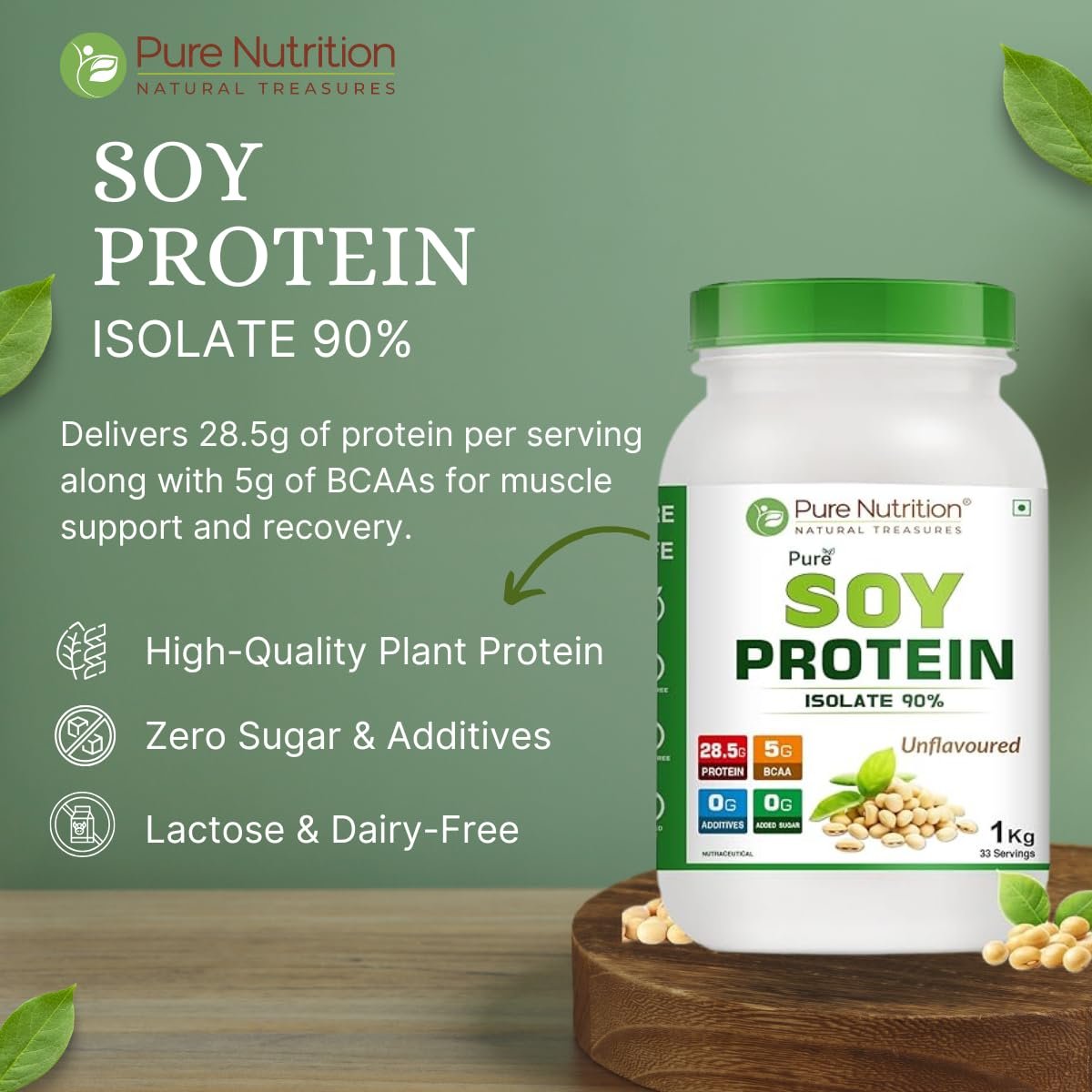
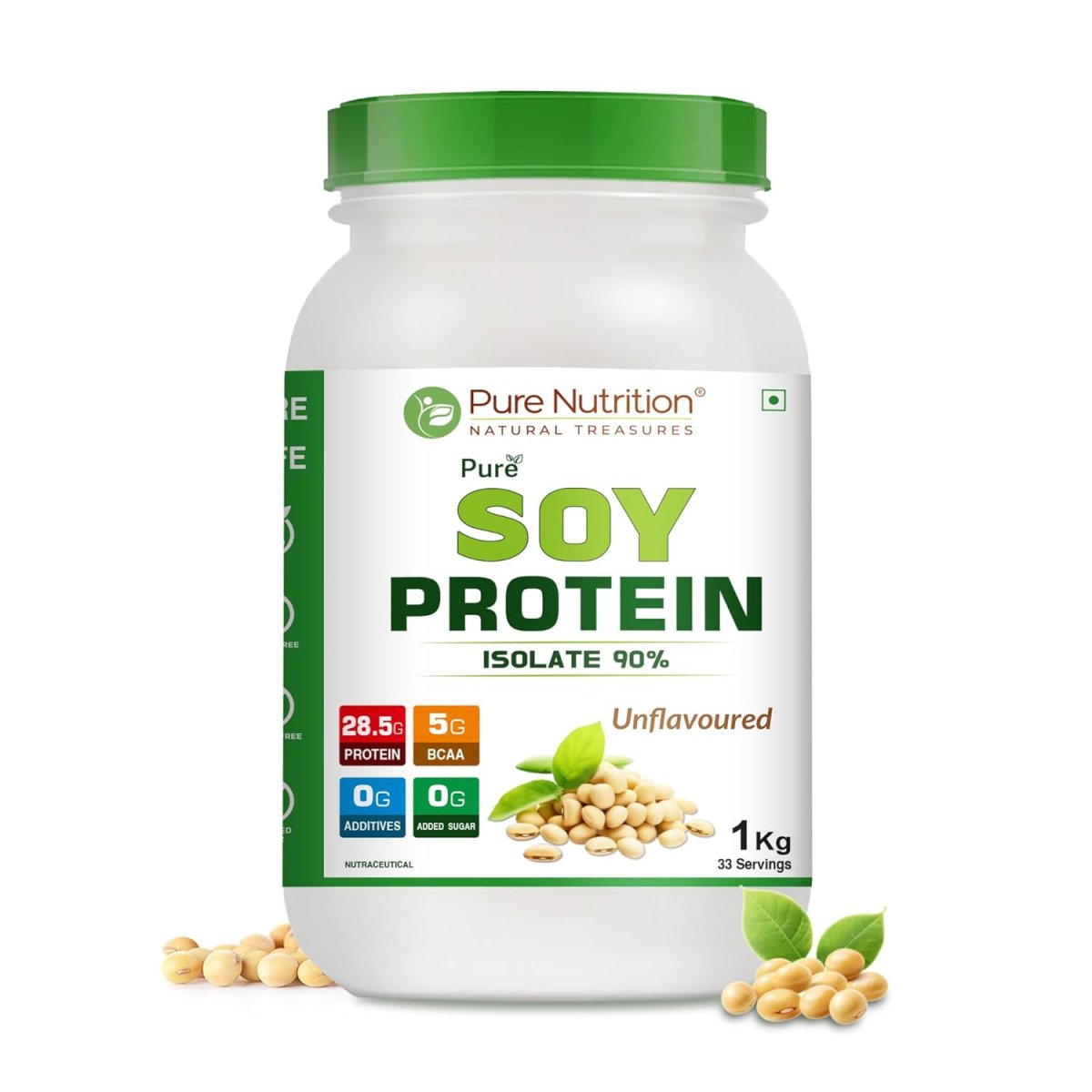
📋 Pure Nutrition Soy Protein Isolate Powder – 1kg | 90% Isolate
🧪 Purity 90%
⚡ Potency 90%
☢️ Metals 96%
💰 Value 95%
📄 Lab Report
No lab report provided📝 Full Review & Breakdown
In a world where clean nutrition and sustainability are equally valued, Pure Nutrition Soy Protein Isolate Powder (1kg, 90% Isolate) emerges as a trusted and effective source of high-quality vegan protein. Designed for athletes, fitness enthusiasts, and individuals looking to improve their protein intake without compromising on purity or digestive comfort, this product sets a new benchmark for plant-based nutrition.
Each serving (30g) delivers a potent 27g of protein with zero added sugar, low carbohydrates, and no artificial flavors or preservatives. The unflavoured format allows for complete flexibility in mixing — be it smoothies, shakes, pancakes, or baked goods. Crafted from non-GMO soybeans, this isolate protein offers a complete amino acid profile equivalent to animal-based sources, making it ideal for muscle repair, recovery, and lean mass development.
Pure Nutrition has earned the trust of fitness experts and nutritionists worldwide due to its science-backed formulation, rigorous quality testing, and certified manufacturing process.
Ingredient Authenticity & Nutritional Science
Pure Nutrition sources non-GMO soybeans that undergo aqueous extraction to yield high-purity soy protein isolate. This process removes fats, sugars, and anti-nutritional components while preserving essential amino acids and bioactive peptides.
Key Nutrients per 30g Serving:
Protein: 27g
BCAAs (Leucine, Isoleucine, Valine): 5.4g
Essential Amino Acids: 9.6g
Fat: <1g
Carbohydrate: 0.9g
Fiber: 0.4g
Soy protein isolate provides a PDCAAS (Protein Digestibility Corrected Amino Acid Score) of 1.0, equivalent to whey protein, indicating complete and highly bioavailable protein (FAO/WHO, 2013). The presence of isoflavones contributes antioxidant and cardioprotective properties, further enhancing overall wellness (Messina, 2016).
Health Benefits
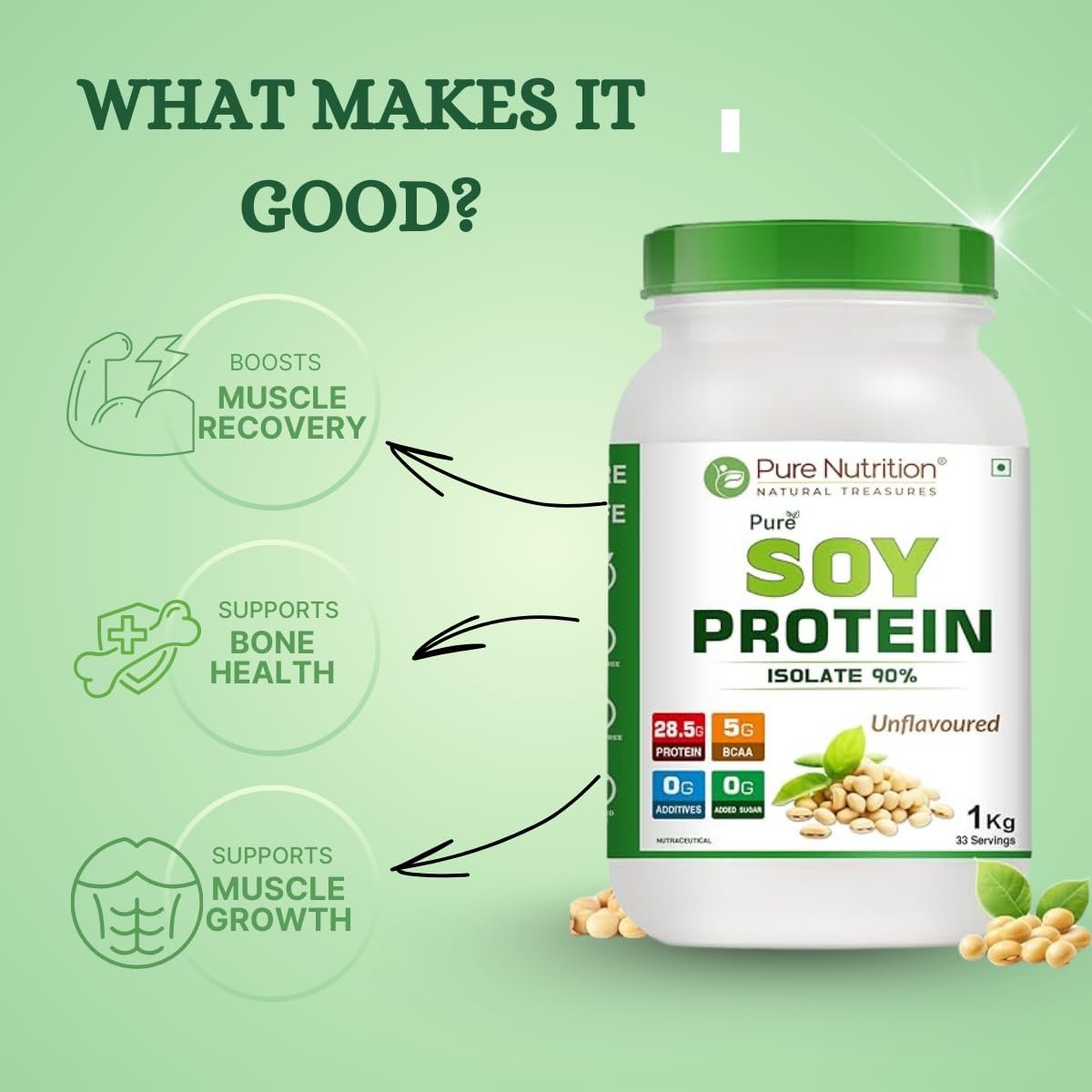
1. Promotes Muscle Growth and Recovery
The 27g of protein per serving, combined with an optimal amino acid ratio, supports post-workout muscle repair and hypertrophy. Studies confirm soy isolate’s effectiveness in enhancing muscle protein synthesis comparable to whey when consumed post-exercise (Tang et al., 2009).
2. Supports Weight Management
Soy protein is known for its satiety-enhancing properties, reducing cravings and helping regulate caloric intake (Yang et al., 2012). Its low fat and carbohydrate content make it a perfect fit for weight management programs.
3. Improves Metabolic Health
Regular intake contributes to improved lipid metabolism and insulin sensitivity, promoting cardiometabolic health (Anderson et al., 1995). Isoflavones in soy have shown to lower LDL cholesterol while maintaining HDL levels.
4. Ideal for Lactose-Intolerant Individuals
Unlike dairy-based proteins, soy isolate is lactose-free, making it suitable for individuals with lactose intolerance or dairy allergies.
5. Hormonal Balance and Bone Health
Soy’s natural phytoestrogens support hormonal balance, particularly in women, and contribute to bone mineral density maintenance (Kreijkamp-Kaspers et al., 2004).
6. Boosts Immunity and Gut Health
Enriched with bioactive peptides, soy protein enhances immune defense and promotes gut microbiota balance. Its fermentable fiber fraction supports beneficial gut bacteria.
Usage and Dosage
Recommended Usage:
Mix 1 scoop (30g) with 250–300ml of water, almond milk, or smoothie base.
Shake well until completely dissolved.
Consume once or twice daily, ideally:
Post-workout (for muscle recovery)
Ad 16
Morning (to prevent catabolism)
Between meals (for satiety)
For Weight Management: Replace one meal with a soy protein shake combined with fiber and greens.
For Muscle Gain: Combine with carbohydrate sources such as oats or bananas post-workout for optimal glycogen replenishment.
Precautions & Possible Side Effects
Do not exceed the recommended daily dose.
Individuals with soy allergy should avoid this supplement.
Pregnant or lactating women and those under medication should consult a healthcare professional before use.
Mild bloating may occur initially due to high protein intake; ensure adequate hydration.
Store in a cool, dry place away from sunlight and moisture.
References:
Anderson, J.W. et al. (1995). Meta-analysis of the effects of soy protein intake on serum lipids. The New England Journal of Medicine, 333(5), 276–282.
FAO/WHO (2013). Protein quality evaluation: Report of the Joint FAO/WHO Expert Consultation. Food and Agriculture Organization.
Kreijkamp-Kaspers, S. et al. (2004). Effect of soy protein on bone mineral density in postmenopausal women: A randomized controlled trial. JAMA, 292(1), 65–74.
Messina, M. (2016). Soy and health update: Evaluation of the clinical and epidemiologic literature. Nutrients, 8(12), 754.
Tang, J.E. et al. (2009). Ingestion of soy protein results in less postexercise myofibrillar protein synthesis compared with whey protein in young men. American Journal of Clinical Nutrition, 89(1), 97–104.
Yang, Y. et al. (2012). Soy protein intake and satiety in overweight adults. Journal of Nutrition, 142(4), 708–713.
Each serving (30g) delivers a potent 27g of protein with zero added sugar, low carbohydrates, and no artificial flavors or preservatives. The unflavoured format allows for complete flexibility in mixing — be it smoothies, shakes, pancakes, or baked goods. Crafted from non-GMO soybeans, this isolate protein offers a complete amino acid profile equivalent to animal-based sources, making it ideal for muscle repair, recovery, and lean mass development.
Pure Nutrition has earned the trust of fitness experts and nutritionists worldwide due to its science-backed formulation, rigorous quality testing, and certified manufacturing process.
Ingredient Authenticity & Nutritional Science
Pure Nutrition sources non-GMO soybeans that undergo aqueous extraction to yield high-purity soy protein isolate. This process removes fats, sugars, and anti-nutritional components while preserving essential amino acids and bioactive peptides.
Key Nutrients per 30g Serving:
Protein: 27g
BCAAs (Leucine, Isoleucine, Valine): 5.4g
Essential Amino Acids: 9.6g
Fat: <1g
Carbohydrate: 0.9g
Fiber: 0.4g
Soy protein isolate provides a PDCAAS (Protein Digestibility Corrected Amino Acid Score) of 1.0, equivalent to whey protein, indicating complete and highly bioavailable protein (FAO/WHO, 2013). The presence of isoflavones contributes antioxidant and cardioprotective properties, further enhancing overall wellness (Messina, 2016).
Health Benefits
1. Promotes Muscle Growth and Recovery
The 27g of protein per serving, combined with an optimal amino acid ratio, supports post-workout muscle repair and hypertrophy. Studies confirm soy isolate’s effectiveness in enhancing muscle protein synthesis comparable to whey when consumed post-exercise (Tang et al., 2009).
2. Supports Weight Management
Soy protein is known for its satiety-enhancing properties, reducing cravings and helping regulate caloric intake (Yang et al., 2012). Its low fat and carbohydrate content make it a perfect fit for weight management programs.
3. Improves Metabolic Health
Regular intake contributes to improved lipid metabolism and insulin sensitivity, promoting cardiometabolic health (Anderson et al., 1995). Isoflavones in soy have shown to lower LDL cholesterol while maintaining HDL levels.
4. Ideal for Lactose-Intolerant Individuals
Unlike dairy-based proteins, soy isolate is lactose-free, making it suitable for individuals with lactose intolerance or dairy allergies.
5. Hormonal Balance and Bone Health
Soy’s natural phytoestrogens support hormonal balance, particularly in women, and contribute to bone mineral density maintenance (Kreijkamp-Kaspers et al., 2004).
6. Boosts Immunity and Gut Health
Enriched with bioactive peptides, soy protein enhances immune defense and promotes gut microbiota balance. Its fermentable fiber fraction supports beneficial gut bacteria.
Usage and Dosage
Recommended Usage:
Mix 1 scoop (30g) with 250–300ml of water, almond milk, or smoothie base.
Shake well until completely dissolved.
Consume once or twice daily, ideally:
Post-workout (for muscle recovery)
Ad 16
Morning (to prevent catabolism)
Between meals (for satiety)
For Weight Management: Replace one meal with a soy protein shake combined with fiber and greens.
For Muscle Gain: Combine with carbohydrate sources such as oats or bananas post-workout for optimal glycogen replenishment.
Precautions & Possible Side Effects
Do not exceed the recommended daily dose.
Individuals with soy allergy should avoid this supplement.
Pregnant or lactating women and those under medication should consult a healthcare professional before use.
Mild bloating may occur initially due to high protein intake; ensure adequate hydration.
Store in a cool, dry place away from sunlight and moisture.
References:
Anderson, J.W. et al. (1995). Meta-analysis of the effects of soy protein intake on serum lipids. The New England Journal of Medicine, 333(5), 276–282.
FAO/WHO (2013). Protein quality evaluation: Report of the Joint FAO/WHO Expert Consultation. Food and Agriculture Organization.
Kreijkamp-Kaspers, S. et al. (2004). Effect of soy protein on bone mineral density in postmenopausal women: A randomized controlled trial. JAMA, 292(1), 65–74.
Messina, M. (2016). Soy and health update: Evaluation of the clinical and epidemiologic literature. Nutrients, 8(12), 754.
Tang, J.E. et al. (2009). Ingestion of soy protein results in less postexercise myofibrillar protein synthesis compared with whey protein in young men. American Journal of Clinical Nutrition, 89(1), 97–104.
Yang, Y. et al. (2012). Soy protein intake and satiety in overweight adults. Journal of Nutrition, 142(4), 708–713.
🧪 Ingredient Breakdown
| Ingredient | Dose | Status |
|---|---|---|
| Protein | 28.5 g | ✅ Optimal |
| BCAAs (Leucine, Isoleucine, Valine) | 5 g | ✅ Optimal |
💬 Comments (0)
Leave a Comment